The Authenticity Test That Misses How Recipes Change
A better way to judge an authentic recipe: understand how migration, local ingredients, and household choices shape a dish without erasing its roots.
Authentic recipes change as cooks move, shop, and feed the people around them. If you are wondering whether a dish is still authentic after an ingredient swap or a family adjustment, the useful question is not whether it matches one supposed original. It is what the change responds to, and whether the dish’s identity remains legible. An authenticity test that demands a single fixed version can mistake a living food tradition for a museum display.
What are you actually trying to preserve?
Before judging a variation, name the part of the dish that matters to you. It might be a recognizable flavor, a cooking method, a serving occasion, a connection to a region, or the memory of a particular household. Those are not interchangeable. A stew can retain its customary seasoning while using a different cut of meat; a flatbread can preserve a family’s shaping technique even when the flour changes.
People often use “authentic” to mean several things at once: faithful to a place, faithful to a family, prepared in a familiar way, or simply satisfying and recognizable. Confusion follows when one meaning is treated as the only valid one. A restaurant version might represent a regional convention, while a home version reflects what a family cooks on an ordinary evening. Neither automatically cancels the other.
Try to describe the dish without turning that description into a purity test. “This version uses toasted spices and is usually served with rice” leaves room for variation. “It must always contain this exact ingredient or it is not the dish” makes a stronger claim, one that may not fit how cooks actually adapt.
Does the change come from migration or local availability?
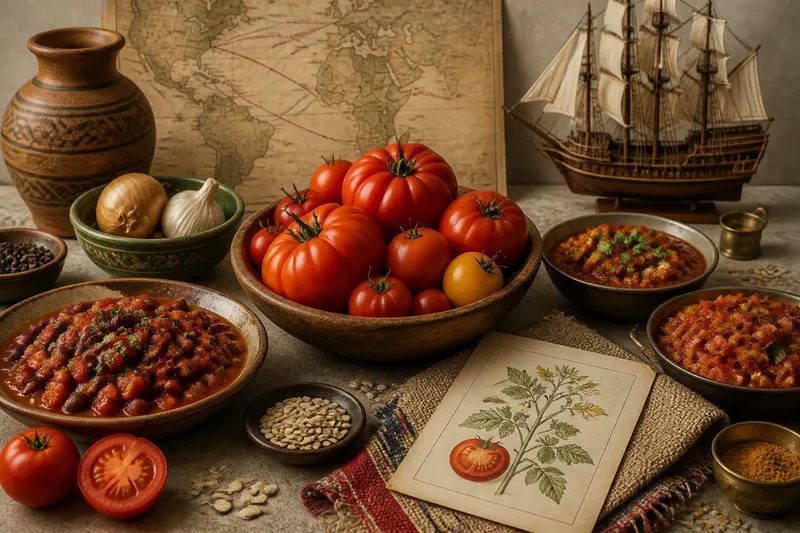
If a recipe crossed a border with its cooks, ask what they could buy or grow after the move. A familiar ingredient may be scarce, costly, sold in a different form, or absent from the local market. Substitutions can become part of a community’s food culture, especially when cooks repeat them and pass the adapted recipe to others.
That does not mean every substitution has the same effect. Replacing a fresh chile with a dried one may change aroma and texture as well as heat. Using a local leafy green in place of one that cannot be found may preserve the dish’s role in a meal while giving it a distinct taste. The sensible question is what the swap changes and what it carries forward—not whether the cook has violated an invisible rule.
Say you have moved from a coastal town where a particular fish is easy to find to a city where the market offers a different firm-fleshed fish. If you choose the local fish because it holds together in the same stew, the result may preserve the cooking method and place of the dish in the meal, while tasting unmistakably of its new setting. Calling that version “the same” or “different” depends on which feature you are discussing; both descriptions can be useful.
Are you following a household tradition or a regional convention?
When a relative says a dish “has always been made this way,” that may be a precise account of one household’s practice. It is not necessarily evidence that every family in a region cooks it identically. Recipes are often learned by watching, tasting, and adjusting, so written directions can make a flexible practice appear more rigid than it is.
If you are cooking from a family recipe, begin with its own cues: the color of onions, the smell of spices, the softness of a vegetable, or the texture of dough. A handwritten instruction such as “add enough water” may preserve the cook’s judgment better than a precise volume would. Ask relatives what they notice as they cook, and record that guidance alongside the ingredient list.
If you are trying to represent a regional dish to people unfamiliar with it, give context rather than announcing a single definitive recipe. Explain which version you learned, where its habits come from, and what you have changed. That approach is more informative than claiming authority over a tradition that contains many homes, communities, and circumstances.
Which version fits your situation?
- You are cooking for a family gathering. Follow the household version people recognize, especially if the meal is tied to a shared memory. If an ingredient is unavailable, explain the substitution and keep the familiar seasoning or serving ritual where possible.
- You are cooking with ingredients from a new market. Choose a substitute that serves a similar purpose in texture, flavor, or cooking time. Be clear that the result is an adaptation, not a claim that the ingredients are interchangeable in every recipe.
- You are learning a dish from another community. Start with a source that explains its regional or household context, then follow that version closely before making personal adjustments. Learning the baseline helps you understand what your changes alter.
- You are adapting for a preference or dietary need. Make the change that allows the people at your table to eat comfortably, and describe the result honestly. A personal adaptation can be worthwhile without being presented as the customary form.
- You are writing a menu or recipe description. Name the version, place, or influence you can responsibly identify. Avoid presenting one cook’s method as the sole authentic expression of a broad food tradition.
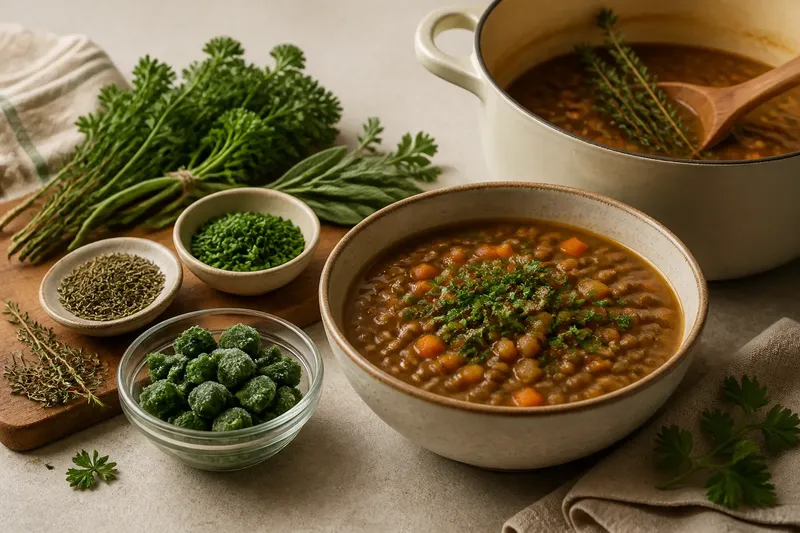
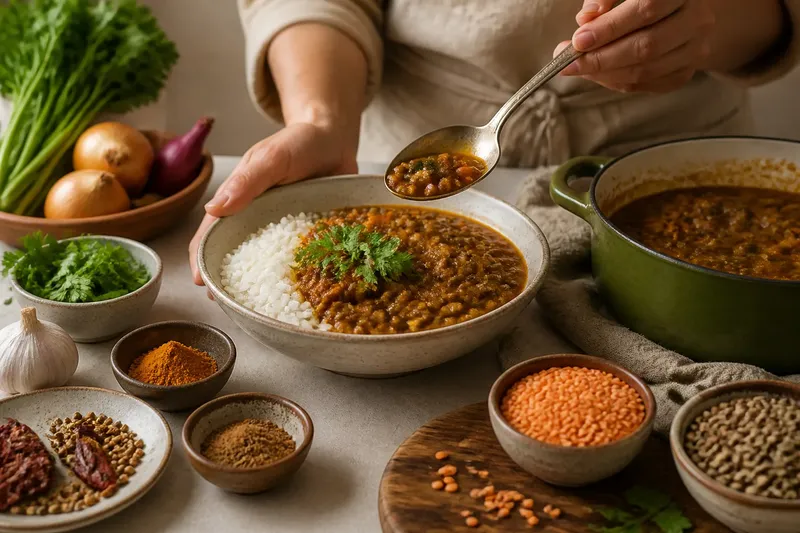
Imagine a cook preparing a familiar lentil dish for a relative who avoids a certain ingredient. The cook leaves it out, adjusts the seasoning so the dish still tastes balanced, and tells the family what changed. The expected result is a meal that remains recognizable to those at the table while being clearly identified as this household’s adapted version. No broader claim about the dish needs to follow.
What do cooks ask when a recipe changes?
Can a substitution still be authentic?
It can be authentic to a household or to a community’s adaptation, even if it differs from another region’s customary ingredients. Describe what was substituted and why, rather than treating authenticity as a yes-or-no label.
Is a family recipe more authentic than a restaurant version?
They may represent different settings and purposes. A family recipe reflects one household’s practice, while a restaurant version may draw on a regional style or respond to what diners expect; neither is automatically the universal standard.
How can I tell whether a dish has changed over time?
Compare versions through cookbooks, family notes, market ingredients, and the memories of people who prepare or eat the dish. Look for what remains consistent as well as what shifts, and keep distinctions between personal recollection and broader claims clear.
Should I call my adaptation authentic?
If the word helps explain a real connection, specify what that connection is: a family practice, a regional style, or a community adaptation. If you cannot say what the claim refers to, a plain description of the change is more useful.
How can you talk about variation without flattening it?
Use language that locates a recipe rather than ranking versions. “My aunt’s version,” “a market-day adaptation,” and “the style I learned in my neighborhood” each tell a reader something concrete. “The authentic version” can imply that every other cook is mistaken, even when the speaker means only “the version I know best.”
It also helps to distinguish a change in ingredients from a change in meaning. A dish may keep its customary place at a celebration while its ingredients shift with migration. Another may retain its name but be prepared in a way that a particular family considers unfamiliar. These distinctions make conversation more precise and leave room for disagreement without turning it into a contest over who belongs.
For readers searching for an authentic recipe, the best starting point is a version with a clear source and a clear purpose. Decide whether you want to learn a particular regional method, recreate a relative’s dish, or make something suited to your own kitchen. Then choose ingredients and instructions that serve that aim, and label your changes plainly.
The authenticity test that asks whether a recipe has changed will usually find that it has. A better test asks who changed it, under what conditions, and what the cook hoped to preserve. That framing gives you a more honest way to choose a version—and a more generous way to describe the food on your table.