Fresh, Dried or Frozen Herbs: What Changes in the Pot?
Fresh, dried or frozen herbs can shape a dish in different ways. Match the herb’s form to its role, cooking method, and the texture you want at serving.
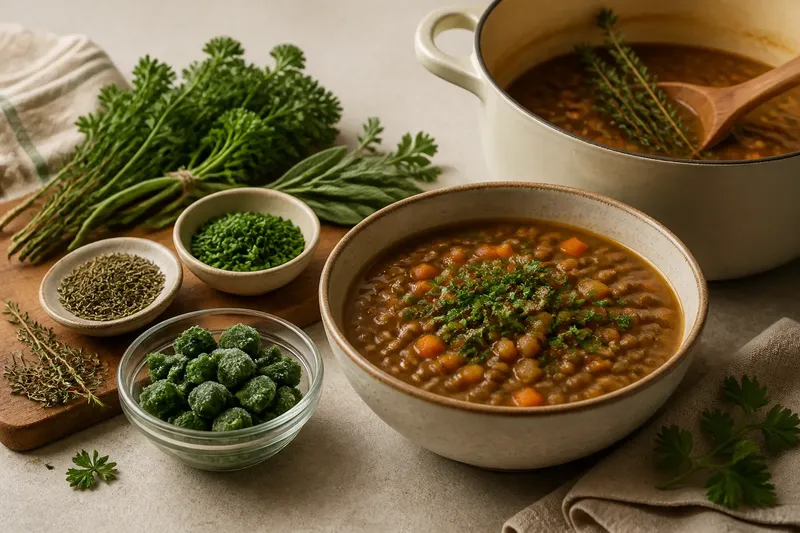
Fresh, dried or frozen herbs can shape the same pot of lentil soup in different ways: one may bring a leafy finish, another may settle into the broth, and a third may add flavor while softening into the stew. The useful question is not which form wins, but what you want the herb to contribute when the dish reaches the table.
What do you want the herb to leave behind?
Herbs can do more than supply a familiar flavor. A whole sprig can perfume cooking liquid and then be lifted out; chopped leaves can remain as part of the dish; a pinch of dried herb can mingle with a seasoning base. Decide whether the herb should be visible, integrated, or easy to remove.
Fresh leaves are useful when their color, shape, or leafy aroma belongs in the finished food. Dried herbs are compact and can blend into a cooked base, though their aroma varies with the herb and how it has been stored. Frozen chopped herbs are convenient for moist dishes, but thawing softens their texture and may release liquid.
That distinction changes the choice. Parsley on top of a salad has to look and feel lively; parsley stirred into a warm grain filling can be softer without distracting from the dish. A rosemary sprig in a pot of beans can lend aroma without leaving a tangle of leaves on the spoon.
How does the cooking method change the choice?
Long cooking gives flavors time to mingle, so dried herbs and sturdy whole sprigs can work well in soups, braises, and beans. Tender leaves such as basil, dill, cilantro, and chives are often better added near serving if you want their aroma to remain distinct. These are useful tendencies, not fixed rules; the herb, cut, and dish all matter.
For a quick sauté, dried herbs can briefly warm in oil with the other aromatics, but watch closely so they do not scorch. Frozen herbs fit more naturally into soups, sauces, and other moist preparations, where their thawing liquid can disperse. They are less suitable when a dry, crisp finish or clearly shaped garnish is the point.
Consider the serving vessel, too. In blended soup, softened leaves can disappear into the texture. On a composed plate, the same limp pieces may look out of place, so reserve fresh leaves for the visible finish.
How do you adjust when a recipe calls for another form?
Dried herbs have less water than fresh leaves, so an equal volume can taste much stronger. There is no dependable conversion for every herb: age, storage, and how finely the leaves are cut all affect their strength. Begin with less dried herb than the recipe’s fresh amount suggests, then taste and adjust.
Imagine you are making lentil soup, and the recipe calls for fresh thyme while your cupboard holds dried thyme. Add a small pinch with the onions, let it warm briefly, then taste the broth once the lentils soften. If the thyme is barely noticeable, add another pinch; if it already supports the lentils without overtaking them, stop. The decision is based on the broth’s aroma and balance, not on a fixed conversion.
Frozen herbs also vary in cut and intensity. Follow package directions if available, add a little to a moist dish, and taste before adding more. If the pieces release more water or become more visible than you want, stir them into the cooking liquid rather than using them as a topping.
Which herb form fits the dish you are making?
- Visible leafy finish: Check whether the leaves need to look distinct and feel fresh; if they do, choose fresh herbs, and if appearance is unimportant, consider frozen herbs stirred into the dish instead.
- Long-simmered beans or stew: Check whether the herb should remain in the serving; if not, use a woody sprig you can remove, and if you want the flavor distributed throughout, use a modest amount of dried herb.
- Quick oil-based sauté: Check whether you can stir the pan continuously and keep the heat controlled; if so, briefly warm dried herbs, and if not, add them later in a moist ingredient to reduce the chance of scorching.
- Soup or sauce with added liquid: Check whether softened pieces and a little thawing liquid suit the texture; if they do, use frozen herbs, and if not, choose dried seasoning or fresh leaves added at serving.
- Recipe calling for fresh herbs: Check whether the herbs are cooked into the dish or used as a garnish; if cooked, dried herbs may suit the method, and if they are a garnish, use fresh leaves or leave the garnish out.
- Jar of dried herbs: Rub a small amount between your fingers and smell it; if the aroma is clear, season gradually with it, and if it smells faint or dusty, replace it or choose another herb that fits the dish.
What questions come up when swapping herbs?
Can dried herbs replace fresh herbs in a cooked recipe?
Often, if the herb is meant to season the cooking rather than provide a visible finish. Start with less dried herb than the recipe’s fresh amount and adjust by tasting.
Can frozen herbs work as a garnish?
They usually lose their distinct shape as they thaw, so they are better stirred into cooked food. Choose fresh leaves when the garnish needs to look crisp and leafy.
Should tender herbs go in before or after cooking?
Add them near the end when you want their aroma to stand out. If you want a quieter, more integrated flavor, add some earlier and taste before serving.
How can you tell if dried herbs still smell aromatic?
Rub a pinch between your fingers and smell it. A clear herbal aroma suggests it can contribute; a faint or dusty smell is a reason to use a fresher supply or choose another herb.
Can different forms serve different roles in one dish?
Yes. You might season a cooking base with dried herbs and finish the dish with fresh leaves, keeping the two forms in separate roles rather than using them as direct substitutes. Frozen herbs can also fill a supporting role in a moist dish when fresh bunches are not on hand.
Storage affects how useful each form will be. Keep dried herbs closed and away from heat and light, return frozen herbs to the freezer after taking what you need, and use fresh bunches while their leaves still look and smell sound. Follow product labels and relevant handling directions.
For fresh, dried or frozen herbs, begin with the texture and aroma you want on the plate, then account for how the dish cooks. That small decision can tell you whether the herb belongs in the pot, in a removable sprig, or on the finished serving.