A Shared Supper Where Everyone Brings One Dish
Plan a relaxed potluck with a simple dish map, a thoughtful serving order, and clear messages that help guests bring food people can enjoy.
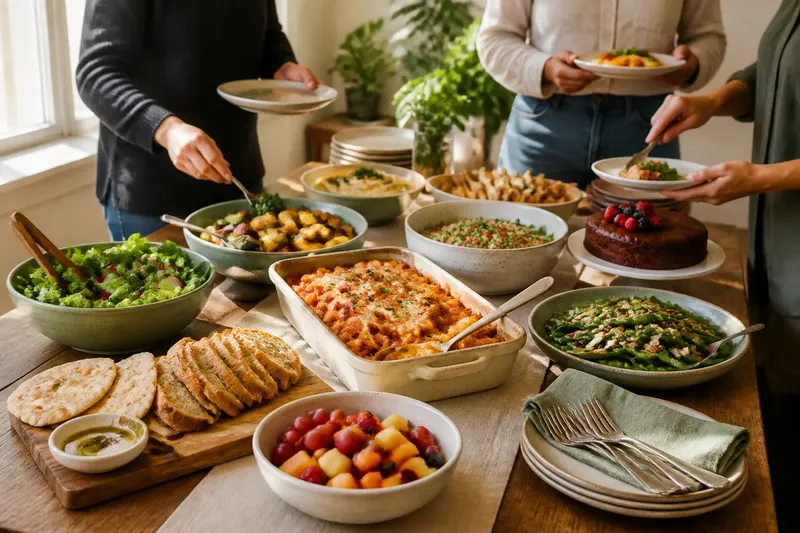
A relaxed potluck begins with a useful answer to one question: what will be on the table besides the dish each guest happens to choose? A shared supper where everyone brings one dish works best when the host makes room for variety without assigning everyone a recipe. A little coordination can keep the meal generous, manageable, and open to the foods people actually like to cook.
What should the host decide first?
Start with the shape of the meal, not a menu. Decide whether guests will serve themselves from a counter, gather around a dining table, or eat in a room where people may be standing. That choice affects what travels well, what needs a serving utensil, and whether hot dishes can stay hot. It also tells you how much table space to leave clear for plates, drinks, and the dishes still arriving.
Then name a loose meal structure. For instance, you might ask for a few substantial dishes, something fresh, bread or another accompaniment, and dessert. These are invitations, not rigid quotas. If one guest offers a dish that can serve as a main, another person can choose a salad or a sweet rather than bringing a second similar centerpiece.
Set the boundaries that make the gathering workable: the arrival window, whether the host is providing drinks, and what kitchen equipment is available. A guest may need an oven, refrigerator space, or only a place to set down a container. Say what you can offer before anyone plans around an assumption.
How can guests bring variety without a menu?
A shared sign-up note can show the shape of the table without prescribing cuisines. Use a group message, a shared Google Doc, or a paper list that guests can see. Ask each person to write a short dish description and its broad role: substantial dish, vegetable, salad, bread, condiment, or dessert. The categories help reveal gaps and duplicates while leaving room for personal choice.
Keep the list conversational. “Roasted vegetables with a lemon dressing” gives more useful information than “side,” while “something sweet” leaves the cook free to decide. A few details help guests coordinate: whether the dish is served warm or at room temperature, whether it needs a serving spoon, and whether it contains common allergens the host has asked about.
Avoid treating variety as a demand for one dish from every culinary tradition. The goal is not to display cuisines or make a guest represent a community. It is to offer different textures, temperatures, and roles so people can compose a satisfying plate. A simple menu might include a hearty casserole, crisp greens, flatbread, and fruit; another might center on dumplings, a crunchy vegetable dish, rice, and a small cake. Either can feel complete without an assigned theme.
Say you are hosting friends in a small apartment and two people volunteer baked pasta. You could keep one as the substantial dish and ask the other guest, privately and warmly, whether they would enjoy bringing a salad or dessert instead. The visible result is a table with more contrast, while both guests retain a real choice rather than receiving a correction in front of the group.
What should the invitation say?
Clear communication reduces last-minute guessing. Give guests the practical information in one message, then update the shared list as dishes take shape. A friendly invitation can cover:
- The time guests may arrive and when the meal is likely to begin.
- The kind of contribution that would help, with room for a different suggestion.
- Whether dishes should arrive ready to serve or can be finished in the host’s kitchen.
- What equipment or storage the host can provide, and what is not available.
- How to mention ingredients relevant to a guest’s dietary needs, without asking anyone to explain personal details to the whole group.
- Whether guests should bring serving utensils and a container for leftovers.
Make dietary questions direct and discreet. Ask guests to tell you about ingredients they need to avoid, and share the relevant dish information with the people who need it. If a guest has a severe allergy or another medical concern, do not promise that a shared kitchen or potluck arrangement is safe; discuss what they need and let them decide whether the setting works for them.
Be specific about the meaning of “one dish.” A large shared salad, a loaf of bread, and a small jar of relish are all contributions, but they do not serve the same role. If you want a meal rather than a collection of snacks, say that you are hoping for dishes that can form part of a plate. Guests can then choose something suited to their time and cooking style.
How should dishes arrive and be served?
Think of serving order as a path across the table. Put plates at the beginning, then substantial dishes, vegetables and salads, breads or accompaniments, and utensils near the foods that need them. Keep drinks slightly apart from the serving line if space permits. That small arrangement can prevent a guest balancing a cup while trying to reach a dish.
Labeling can be low-key. A folded card with a dish’s name and a short ingredient note helps guests make choices without asking the cook to repeat details. It is especially useful for dishes with nuts, dairy, meat, or a sauce that is not obvious by sight. Keep labels factual and brief; no one needs a miniature menu description.
At a self-serve meal, offer serving spoons and tongs where they are needed, and give each dish its own utensil when practical. If a dish arrives in a container that is awkward to serve from, ask before transferring it. The cook may have brought a vessel that should not go in the oven, or may prefer the dish to remain arranged as prepared.
Give hot and cold foods sensible places rather than letting the table decide by accident. Make space in advance for dishes that need warmth or refrigeration, and avoid leaving perishable food out for an extended stretch. Food handling depends on the ingredients, the container, and local food-safety guidance, so follow applicable advice and the dish maker’s instructions when they matter.
Which small decisions make a potluck easier?
How do I handle duplicate dishes?
Ask whether the guests would like to coordinate, not whether one of them must change plans. Two similar dishes can be welcome, especially if the group is large or the recipes differ. If the meal would benefit more from another kind of contribution, suggest a few open alternatives and let each cook choose.
What if a guest has little time to cook?
Make clear that a contribution can be simple, purchased, or assembled, if that suits the gathering. Bread, washed fruit, a prepared dip, or a favorite packaged sweet can help complete a meal. The invitation should make participation feel possible, not turn cooking effort into a measure of generosity.
Should every dish be ready at the same time?
No; a shared supper can unfold in waves. Ask guests to bring dishes ready to serve when possible, and have a small place for early arrivals to set down food. If a dish needs finishing, agree on that ahead of time so the host is not asked to find oven space during the busiest moment.
How can leftovers be shared fairly?
Ask cooks whether they want to take their dishes home, and have reusable containers or spare bags available for food the group agrees to share. Do not assume a guest wants to leave a serving dish behind. A quick conversation before people start packing keeps ownership and cleanup clear.
How can the host keep the mood relaxed?
Let the menu remain a little uneven. A potluck is not a catering order: one dish may draw more attention, while another quietly completes a plate. The host can provide a dependable base—water, plates, napkins, and a place for coats—without trying to fill every gap with extra cooking.
On the day, use the list as a guide rather than a scorecard. If a promised dish changes, ask what would be helpful now; if a guest arrives with an unlisted contribution, make space if you can. A calm adjustment is usually more hospitable than announcing that the plan has gone off course.
Close the loop after the meal with a short thank-you that names something specific: a dish that made the table feel complete, a thoughtful ingredient note, or the care someone took to bring a serving utensil. For a shared supper where everyone brings one dish, the most useful planning is often the kind guests barely notice: enough information to choose well, enough structure to serve comfortably, and enough freedom for the meal to belong to everyone.